
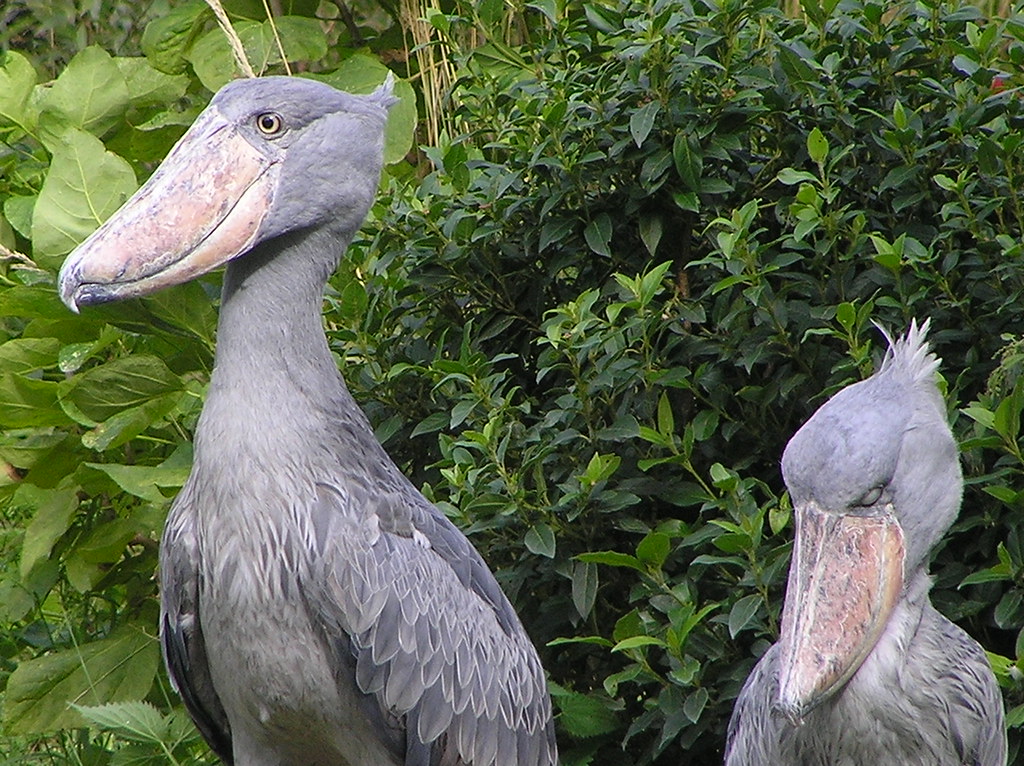
Shoebill Stork — Uganda's Most Iconic Bird
The shoebill stork (Balaeniceps rex) is one of the world's most extraordinary birds — a large, prehistoric-looking species with a massive shoe-shaped bill, slate-grey plumage and an intense stare that has earned it a devoted following among wildlife enthusiasts worldwide. Uganda is the best country on earth to see the shoebill in the wild.
Biology and Behaviour
The shoebill stands up to 1.4 metres tall and has a wingspan of over 2 metres. It hunts by standing motionless in shallow water for extended periods, then lunging with explosive speed to catch lungfish, catfish, tilapia, frogs and occasionally young Nile crocodiles. The distinctive bill can exert enormous pressure and is used to scoop and crush prey. Despite its fearsome appearance, the shoebill is a shy bird that tolerates careful approach by canoe.
Where to See the Shoebill in Uganda
The best sites for shoebill in Uganda are: Mabamba Swamp (most reliable, year-round), the Nile Delta at Murchison Falls National Park (boat trip), Kazinga Channel in Queen Elizabeth National Park (boat safari), Lake Mburo papyrus swamps and Lake Albert wetlands. Mabamba offers the closest and most consistent views — sighting rates exceed 95% on guided canoe tours.
Conservation Status
The shoebill is classified as Vulnerable on the IUCN Red List with an estimated global population of 3,300 to 5,300 individuals. Threats include wetland drainage, papyrus harvesting, human disturbance and nest predation. Uganda holds one of the largest remaining populations. Responsible eco-tourism at managed sites like Mabamba contributes directly to the species' conservation.
Best Time to See the Shoebill
Shoebills are resident year-round at Mabamba Swamp, so there is no wrong season to try — but conditions do vary. The dry seasons (December-February and June-August) keep swamp channels more navigable and sightings slightly more predictable, since birds concentrate around remaining open water. During the wetter months the swamp is lusher and boat access can take a little longer, but resident pairs generally hold the same territories year-round, so guides who fish these channels weekly still know where to look. Early morning departures (6:00-7:00am) consistently produce the best results, before the swamp gets busy and while the shoebill is most actively hunting.
What a Shoebill Tour With Us Looks Like
Our standard shoebill outing is a 2-3 hour dugout canoe trip through the papyrus channels of Mabamba, paddled by a local guide who works the swamp daily and knows the current territories of the resident pairs. Canoes move slowly and quietly, which matters — shoebills tolerate a careful approach but will flush from a noisy one. Alongside the shoebill, the swamp regularly produces African jacana, malachite kingfisher, blue-breasted bee-eater, and — in migration season — large numbers of Palaearctic waders. This works both as a standalone half-day trip from Entebbe or Kampala (see our Shoebill Stork Day Tour) and as the opening leg of our 3-Day Uganda Birding Tour, which pairs Mabamba with Entebbe Botanical Gardens.
Naming and Taxonomy
The shoebill's scientific name, Balaeniceps rex, translates roughly to "whale-headed king" — a nod to its enormous, whale-shaped bill. It was long classified alongside storks, but genetic studies now place it closer to pelicans, in its own family, Balaenicipitidae, with no close living relatives. That evolutionary isolation is part of what makes an encounter feel less like ordinary birdwatching and more like meeting something out of the Miocene.