
Mabamba Swamp Early Morning vs Afternoon: Which Session for Shoebill
Mabamba Swamp at Lake Victoria is Uganda's most reliable shoebill site, offering boat trips on the papyrus channel network twice daily — early morning (departing 6:00am) and afternoon (departing 2:00pm). Most visitors who have a single Mabamba opportunity ask whether the morning or the afternoon session is the better choice. The answer depends on the primary objective — the shoebill encounter, the general papyrus bird list, or photography — and the practical constraints of the visitor's schedule.
The Morning Session: Shoebill Activity Peak
The Mabamba early morning session (6:00am to 9:00am) catches the shoebill during its most active feeding period. The shoebill is a still-hunter — it stands motionless in the shallow papyrus water for minutes or hours, then strikes with explosive speed at a lungfish or other large prey. In the early morning, the shoebill is in its feeding posture at the channel edges in the early light, having moved from its nighttime roost into the open feeding positions at dawn. The morning encounter typically presents the bird in full light, standing at the papyrus channel edge with the open water in front of it and the papyrus wall behind it — the optimal visual and photographic presentation. The other papyrus species are also most active in the early morning: the papyrus gonolek is at its most vocal (a loud, ringing duet between male and female), the lesser swamp warbler sings continuously from the papyrus tops, and the African marsh harrier hunts the papyrus edge in the first hour of light. The morning session produces a more complete papyrus species list in a shorter time than the afternoon and is the recommended session for birders who prioritise species coverage.
The Afternoon Session: Calmer Water and Better Photography Light
The Mabamba afternoon session (2:00pm to 5:30pm) has several practical advantages over the morning for specific visitor categories. The afternoon boat trip catches the papyrus channel in the calmer midday-to-afternoon conditions — the morning wind on Lake Victoria, which creates surface chop and motion in the papyrus channels in the first 2 hours of light, has typically settled by 2:00pm, giving the boat a stable, quiet platform for approach and photography. The afternoon light (specifically the hour from 4:30pm to 5:30pm) is the warmest and most photogenic light of the day at Mabamba, with the low western sun illuminating the shoebill from the front when the boat is positioned to the east of the bird. The shoebill is less active in the afternoon than in the morning — it may be in a resting posture rather than actively hunting — but a resting shoebill is often a more photogenic subject than a moving one, and the relaxed posture of the afternoon bird allows extended observation and photography at close range without the bird flushing. For photographers who are more interested in the quality of the shoebill image than the list length, see our shoebill photography guide — the afternoon session is arguably the better choice.
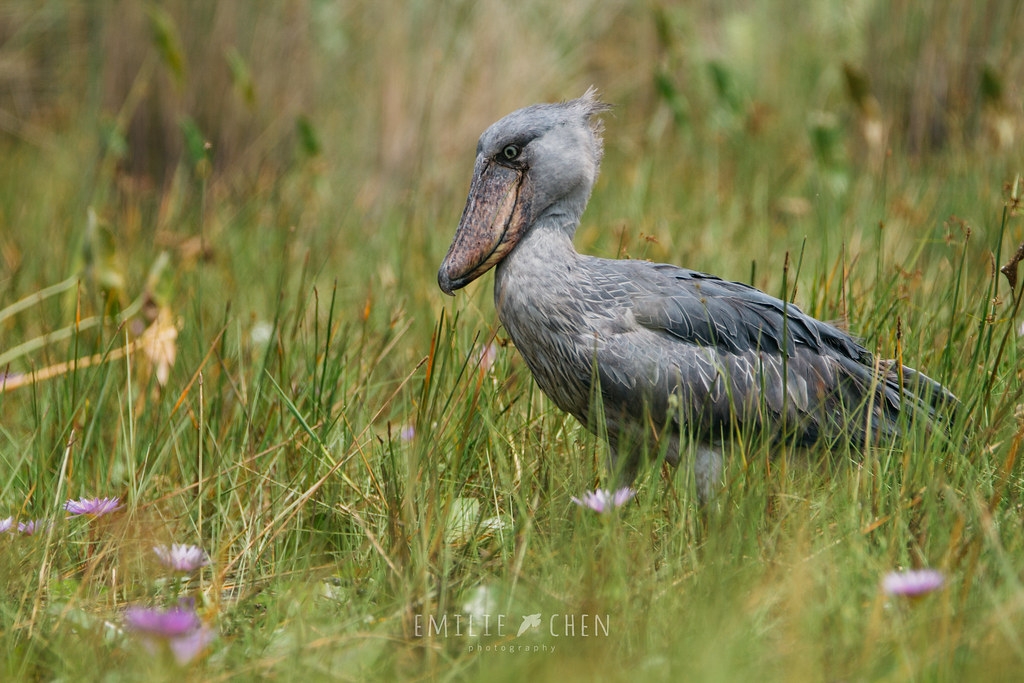
A shoebill stork, Balaeniceps rex. Photo: Emilie Chen / Flickr (CC BY-ND 2.0)
If You Can Only Do One Session: The Verdict
If the visitor has only one Mabamba session available, the early morning (6:00am) departure is the recommended choice in most circumstances. The shoebill encounter probability is slightly higher in the morning because the bird is in its active feeding position and is more likely to be visible at the channel edge. The papyrus species list is longer and the morning session finishes early enough to continue to Entebbe or Kampala for afternoon activities. The exception is the photographer with a specific requirement for warm afternoon light — for that visitor, the afternoon session at Mabamba in July or August (when the afternoon light quality is exceptional) is the better choice. For the visitor who can do both — two sessions in Mabamba on a one-night stay — the combination of both sessions in the same day produces the fullest encounter with the shoebill and the papyrus community, and is the arrangement recommended for serious birders and photographers visiting Mabamba specifically.
Mabamba Boat Operators: Choosing the Right Guide
Mabamba Swamp has multiple licensed boat operators and independent community guides, and the quality of the shoebill encounter depends significantly on the guide's knowledge of the current shoebill territory within the papyrus channel network. The shoebill does not occupy a fixed position year-round; it moves within a defined home range in the papyrus, and the guide who tracked the bird the previous day has the best intelligence on its current position. Shoebill Uganda Bird Tours works with the most experienced Mabamba guides who have tracked the shoebill population at Mabamba for multiple years and know the individual birds by the subtle markings and behavioural characteristics that distinguish them from each other, following the same canoe etiquette standards on every trip. Choosing a guide through a specialist tour operator rather than accepting the first boat at the landing improves the shoebill encounter probability significantly — the difference between a guide who finds the bird in 30 minutes and one who searches for 2 hours without success is primarily a function of the guide's current knowledge of the bird's position.
What to Bring on the Mabamba Boat Trip
The Mabamba boat trip is a 3 to 4-hour open water session in a fibreglass or wooden canoe in the early morning or afternoon. Equipment appropriate for the session: binoculars (essential — the shoebill will be observed at distances from 10 to 50 metres depending on the approach and the bird's behaviour, and the fine detail of the bill, the eye and the body posture are all worth close study through binoculars), a camera with at least a 300mm equivalent lens (the shoebill at 20 metres range fills the frame well with a 400mm lens), sun hat and sun cream (the papyrus channels are open to the sky with no shade, and the equatorial sun is intense even on a cool morning), and light warm clothing for the first hour of the morning session when the lake water creates a cool ambient temperature before the sun is high. Water and snacks for the 3 to 4-hour session are essential; the Mabamba landing has no facilities beyond the boat boarding area.
Visitors planning a Mabamba trip from Entebbe or Kampala should allow at least 3 hours for travel to the Mabamba landing — the road from Kampala to Mabamba passes through Entebbe town and then continues south to the Mabamba village on a paved road for most of its length, with the final section on a murram road to the landing. The 6:00am morning departure from the Mabamba landing requires a 2:45am to 3:00am departure from Kampala or a 3:30am departure from Entebbe. For visitors staying in Entebbe (the most common Mabamba base), a 3:30am departure arrives at the Mabamba landing in comfortable time for the 6:00am boat departure. Birders who want to maximise the Lake Victoria experience around the Mabamba visit can combine the morning Mabamba session with an afternoon boat trip on the Mabamba open lake fringe, which is a completely different habitat from the papyrus interior and holds the open-water species — the African skimmer, the whiskered tern and the water thick-knee — that are not accessible on the papyrus channel boat trip.
Read our how to see the shoebill stork guide for full trip planning, then contact Shoebill Uganda Bird Tours to arrange a Mabamba Swamp double session with both morning and afternoon shoebill encounters.