
Mabamba Papyrus Channels: The Specific Zones Where Shoebills Feed
Mabamba Swamp covers approximately 16 square kilometres of papyrus wetland on the Lake Victoria shore west of Entebbe — a network of papyrus channels, open water pools and seasonal flooded margins. The shoebill does not occupy all 16 square kilometres equally; it concentrates in specific papyrus channel zones based on the distribution of its primary prey (the African lungfish), the water depth, and the degree of shelter provided by the papyrus architecture. Understanding the specific zones where shoebills habitually feed explains why the experienced Mabamba guides find the bird reliably and why less experienced guides spend 3 hours in the wrong channels.
The Lungfish Channel: The Primary Shoebill Feeding Zone
The shoebill's primary prey at Mabamba is the African lungfish — a large (40 to 100 centimetres), air-breathing fish that surfaces at the channel margins in the shallow papyrus-edge water. The lungfish needs to surface to breathe air every 20 to 30 minutes, and this surfacing behaviour is what makes the lungfish visible and catchable for the shoebill. The channels that have the highest lungfish density are characterised by shallow water (20 to 40 centimetres deep), soft mud bottom (the lungfish aestivates in the mud during dry periods and is concentrated in the areas of suitable substrate), and dense papyrus overhang at the water edge (the lungfish shelters under the papyrus root mass and surfaces at the papyrus-water interface). The shoebill stands in these shallow-water, papyrus-overhang positions for extended periods — sometimes 30 to 60 minutes without moving — waiting for the lungfish to surface within strike distance. The experienced Mabamba guide knows which specific channel sections have this combination of water depth, substrate type and papyrus architecture, and directs the boat to those sections first on every morning trip.
The Open Water Pools: Where Shoebills Rest Between Feeding
Between active feeding sessions, the shoebill moves to the open water pools at the interior of the papyrus system — areas where the papyrus has partially cleared to create open water of 10 to 20 metres diameter surrounded by papyrus walls. In these open pool positions, the shoebill is visible from a distance and is accessible by boat through the approach channels, but it is not in active feeding mode. The resting shoebill at the open pool is typically standing with its bill resting on its chest, its body posture relaxed, and its attention directed outward rather than at the water surface. This resting position is the most photogenic shoebill stance — the full bird is visible without any papyrus obstruction, and the calm posture allows extended observation and photography at close range. The experienced guide can predict whether the shoebill at a given pool is in resting mode or about to move to the feeding zone, and times the boat approach accordingly — arriving at the open pool when the bird is at rest gives a longer encounter before the bird moves, while approaching when the bird is in pre-movement posture (head raised, bill angled downward, body slightly tensed) may produce a flight or a movement to the feeding channel.
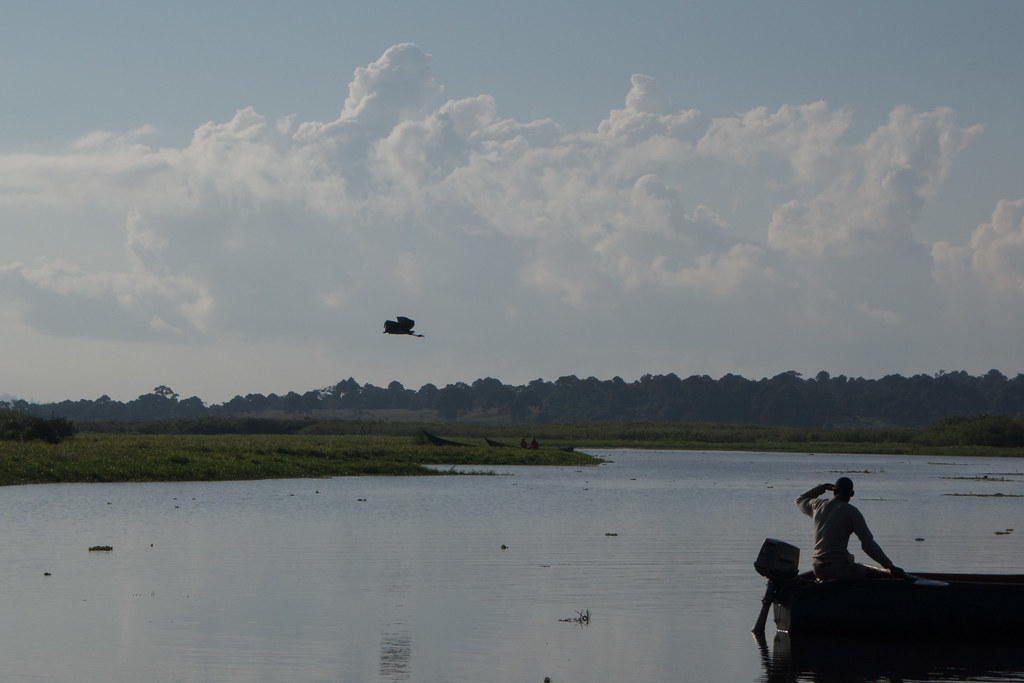
A shoebill in flight over the Mabamba papyrus channels. Photo: Eric Gropp / Flickr (CC BY 2.0)
The Papyrus Interior Zone: Where Shoebills Sleep
The shoebill night roost at Mabamba is in the deep papyrus interior — areas of the swamp where the papyrus density is too high for boat access and which the bird uses as a secure, sheltered resting zone. The night roost is typically 50 to 200 metres from the nearest navigable channel, and the bird moves from the interior roost to the feeding channels in the first hour of light. The movement from roost to feeding zone is audible — the shoebill's large wingbeats (2-metre wingspan) make a loud, low-frequency thud that is audible from 200 metres as the bird passes over the papyrus canopy. Experienced Mabamba guides in the channels in the pre-dawn period listen for this flight call to locate the bird's direction of movement and position the boat at the predicted landing zone — the channel section where the bird typically lands after the roost-to-feeding flight. This technique, which requires being on the water before 6:00am, is the highest-efficiency shoebill encounter method at Mabamba and is the reason the 6:00am morning departure (rather than a 7:00am or 8:00am start) produces better results.
Multiple Shoebill Encounters: When There Is More Than One Bird
The Mabamba shoebill population is estimated at 10 to 15 resident birds, and on the best Mabamba mornings it is possible to encounter 3 to 5 individuals in different sections of the papyrus channel network. The multiple-bird encounter adds a dimension to the Mabamba visit that a single-bird encounter does not — the observer can compare the size, plumage brightness and behavioural differences between individuals. Adult shoebills (4 years and older, distinguished by the fully grey plumage and the absence of brown juvenile feather edging) are visually almost identical — the size differences between individuals are subtle and require experience to detect. The juvenile shoebill (distinguished by the brown-washed plumage and the smaller, less fully developed bill) is occasionally encountered in the Mabamba channel network in the September to December period when the previous breeding season juveniles are beginning to move independently from their parents. The juvenile-adult encounter is the most informative for understanding the shoebill life history and is the most photographically interesting composition — the size and plumage difference between juvenile and adult in the same frame produces an image that conveys the species development in a single photograph. The guide notes whether the current Mabamba population includes a juvenile bird and, if so, in which section of the channel network the juvenile is currently located.
Photography in the Mabamba Channels: Equipment and Positioning
The Mabamba papyrus channel photography requires specific equipment choices that differ from the open savannah photography of the national parks. The papyrus channel boat is at water level — 20 to 30 centimetres above the water surface — which gives a very low angle on the shoebill at the channel edge. This low angle is actually advantageous for shoebill photography: the bird at the channel edge is typically standing at papyrus-root level (10 to 30 centimetres above the water surface), and the boat-level viewpoint creates an eye-level perspective on the bird rather than the top-down perspective of a vehicle-based encounter. The optimal focal length for Mabamba shoebill photography: 300mm to 500mm equivalent, allowing frame-filling shots at 15 to 30 metres range and head-portrait shots at 10 metres. The in-channel papyrus walls create a natural studio background — the green papyrus behind a grey shoebill against reflected blue sky water is the most commonly reproduced Mabamba image. Bring a lens cloth; the papyrus channels generate humidity that fogs the lens in the first hour of the morning. See our full shoebill photography guide for detailed camera settings.
Seasonal Changes in Shoebill Channel Use
The specific channels used by the Mabamba shoebill population change with the seasonal Lake Victoria water level. When the lake is at its annual low point (typically January to March in Uganda), the papyrus channel water depths decrease and new mud-bottom feeding areas become accessible that are too deep to use at high lake level. Conversely, at high lake level (April to June after the long rains), some of the typical feeding channels become too deep for the lungfish to surface conveniently and the shoebill concentrates on the remaining shallow-water areas. The experienced Mabamba guides adjust their channel route according to the current lake level — checking the known high-density lungfish channels and redirecting based on the current shoebill distribution. Visitors who visit Mabamba more than once on the same Uganda trip (a second Mabamba morning is recommended for photographers who want a specific image angle) will notice the guides taking different channel routes on the second visit based on where the bird was found the previous day.
Read our how to see the shoebill stork guide for full trip planning, then contact Shoebill Uganda Bird Tours to arrange a Mabamba shoebill encounter with an experienced guide who knows the current feeding channel positions.